

After a trader stops his heavy position in 2023, he will subconsciously reduce his position every time he encounters a similar opportunity in the next two years.
It was not a strategy that required him to do this, and there was no data to support the judgment that "this time he will also lose money."
But he just didn't dare to lower his hand.
And another trader caught a big trend in 2022.
Whenever similar signals appeared in the market after that, he was more aggressive than usual - taking larger positions, entering the market earlier, and making wider stops.
On the surface, one of these two people is conservative and the other is radical, but they do the same thing: let a certain past experience place an order for the current self.
And they may not realize it.
Memory secretly rewrites your risk appetite
In 2024, NBER published a study based on real transaction data of 17,000 Chinese retail investors.
Researchers found that investors do not make decisions based on all historical experience, but form expectations based on "recalled experiences."

Crucially, these recalled experiences explain expectations even more than the actual experiences themselves.
On days when the market rises, investors are more likely to recall episodes in which they made money in the past, and are therefore more optimistic about the future; on days when the market falls, the memory of losses is recalled, and expectations turn negative.
Laboratory studies have also found a similar direction: when participants are asked to recall their profitable transactions before investing, they will be more aggressive in subsequent bets; while the inhibitory effect of recalling losing episodes is far less symmetrical than imagined.
This shows that the brain is not "objectively referring to past experience."
It is prompted by the current market conditions and emotions, selectively pulls out a certain memory, and then uses this memory to redefine your feelings about risks.
You think you are making a judgment, but in fact it is just the current market that has chosen the past for you to recall.
It will disguise itself as two seemingly "reasonable" judgments
Memory bias doesn't come in the form of "I'm being affected by the memory."
It will take on the garb of analysis.
The first type is "this time there is an opportunity" after making a profit.
You have made a lot of money in a certain type of market before, and that experience has been marked by your brain as a success template.
When you encounter similar signals later, your brain automatically recalls this memory, making you feel that "there is a chance this time."
The position is enlarged unconsciously, and the stop loss is relaxed unconsciously.You think you are doing a review, but in fact you are just replaying a video.
The most common mistake people make at this time is not not to make a profit, but to return the newly pocketed profits together with the principal - because people will truly believe in themselves when things go well.
"The feeling is here", and the profit on the book is never yours until you leave the market.
The second type is "wait a little longer" after a loss.
You have had the experience of losing money once before and finally the market came back.
This memory is labeled by the brain as "patience is useful".
After that, every time there was a loss, the same voice came out: "Try it again, won't you come back last time?" You can find reasons for support levels, pressure levels, and fundamentals, but what really makes you unable to let go is that old experience.
And one dead carry can often erase the previous ten small profits.
Because you can always find reasons not to cut when you are experiencing floating losses, but the market will not give you another chance just because you "got it back last time."
Why can't I keep an eye on myself?
The problem is that in both situations you truly feel you are right.
When things are going well, you really believe that "this time is different"; when things are going badly, you really believe that "if you hold on a little longer, you'll be back."
Let the person affected by the memory judge whether he or she has been affected by the memory - this thing itself is unreliable.
So what you need is not to "work harder to be aware", but a risk control line that you set in advance and execute when it arrives, leaving no room for bargaining.
What EagleTrader Max does is to pre-set risk control as hard constraints at the account level.
It doesn't care what you are thinking at the moment, it only recognizes the predetermined numbers.
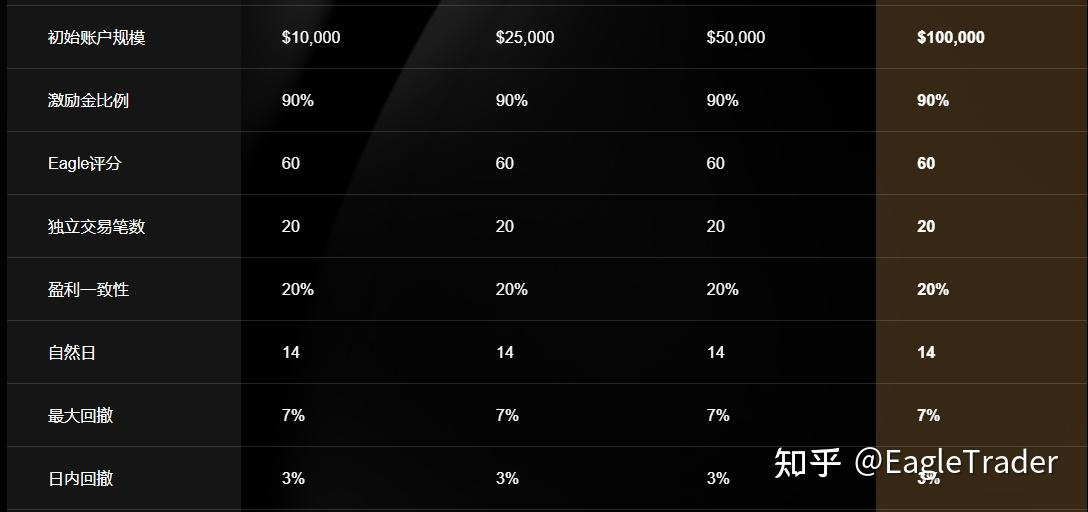
For "expanding positions after profits", it uses a maximum retracement line based on the highest historical water level - 7%, which only rises but does not fall.
When the account goes from 100,000 to 109,000, the retracement line moves up from 93,000 to 101,300.
The newly earned 9,000 is no longer your loss capital.
If you do well, the line will follow you; if you want to magnify the risk because of the successful experience in your memory, this line will not give you an extra millimeter of space.
For "carrying on losses after losing money", it uses an intraday retracement line based on the highest water level of the day - 3%, which is reset every trading day.
If you do well in the morning, the line in the afternoon will not be relaxed just because "you have made money today".
It doesn't care which memory is being replayed in your mind, it only recognizes one number: how much space you have left from today's highest point.
Leave as soon as you get online - the "wait" option does not exist at the system level.
It will also look at one more layer: checking whether your profits are distributed among multiple repeatable transactions or concentrated on a few heavy bets. This is the role of "profit consistency" in the Max profit sharing condition.
This psychology essentially means that the brain will amplify those impressive experiences and use them to quickly judge the risks at hand.
To change it, the key is not to force yourself to forget the past, but to bring each transaction back to the strategy, probability, and risk rules themselves.
Risk control mechanisms like EagleTrader Max can fix part of the risk boundary in advance and reduce the interference of emotions and past experiences on execution.
The past can serve as experience, but it should not be the decider of your next deal.
Contact
|
Leave a message online
|
Service hotline
852-53489575
 |

Incubate the world's top traders
Participate in 90% profit sharing