

You have been using a trading strategy that has been proven over time.
Today, you made several transactions in succession according to the system signals, and all ended up being stopped and exited.
There was a retracement in the account, and the familiar entry signals seemed to suddenly no longer work.
At this time, people can easily become suspicious: Is the strategy invalid? Should we change the parameters or even change the method?
But take a longer look: In the past 100 transactions, this strategy has made 55 profits and 45 losses. Under the established profit-loss ratio, the overall return remains positive.
So today's losses may not necessarily mean there is a problem with the system.Because judging from historical records, losses are inherently part of the normal results of this trading system.
This is probabilistic thinking in trading.

Probabilistic thinking: not every move must be correct
No strategy can guarantee the next profit.A system with positive expectations does not mean that you will make money on every transaction, or even make money every week.
It means that, on the premise that the strategy conditions and execution methods are relatively stable, as the transaction sample increases, the overall results are more likely to reflect long-term advantages.
If 45 of the past 100 trades have been losses, the losses are not necessarily abnormal, but may also be part of normal operations.
What we really need to pay attention to is: Is the winning rate still in line with the original performance? Is the profit-loss ratio reasonable? Is the maximum drawdown beyond the historical range?

But a single loss is not the most testing thing.
What really makes people question the strategy is often continuous losses.
Assume that the winning rate of a strategy is only 40%, but the profit-loss ratio reaches 2:1.
From the perspective of long-term expectations, it may still be a positive strategy.
But because the probability of a single loss is as high as 60%, the probability of three consecutive losses is actually 21.6%.
If there are 15 transactions in a week, assuming that each transaction is independent of each other and the winning rate remains unchanged, the probability of encountering at least one "three consecutive losses" in a week can even reach about 85%.
In other words, continuous losses do not necessarily mean that the strategy has failed. It may just be a normal probability result in this trading system.
Distinguish between normal retracement and strategy failure
Understanding probability does not mean that all losses are normal.The key is to distinguish: normal retracement, or strategy failure?
Normal retracement: The transaction is still executed according to the original rules, and the loss does not deviate significantly from past statistical performance.
For example, a trend strategy is prone to continuous stop losses in volatile market conditions. If the retracement amplitude and loss frequency are still within the historical statistics and risk tolerance range, it is more likely to be a normal retracement of the strategy.
Strategy failure: If the winning rate continues to decline, the retracement clearly breaks through the historical range, or the originally effective trading logic cannot be repeated for a long time, you need to re-evaluate whether the strategic advantage is weakening.
To judge whether a strategy has failed, you should not just look at the number of losses today, but put the current performance back to the long-term record for comparison.Short-term losses need to be accepted, and long-term anomalies are worth evaluating.
However, after continuous losses, many traders begin to modify parameters and switch strategies before they have time to complete the evaluation of sufficient samples.
The result may be: the old strategy has not been fully verified, the new strategy is abandoned again due to short-term losses, and in the end no set of methods can be stably implemented.
A high return, not as good as long-term consistency
If you make a lot of money on a trade, does that mean you performed well? Not necessarily.
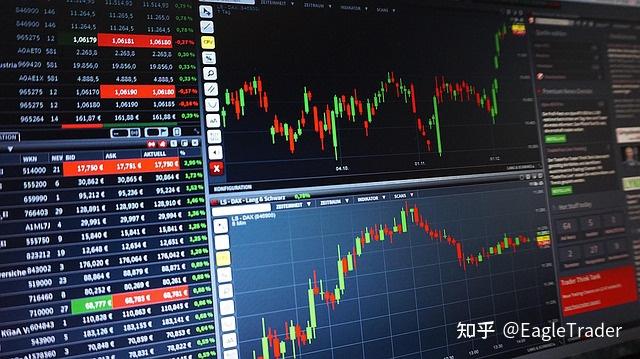
Catching a big market trend at once may lead to significant short-term account growth.
But if almost all the profits in the entire period come from this one transaction and other transactions fluctuate greatly, this income structure may not be stable.
The two traders ultimately made the same profit, one relying on a certain heavy position and the other relying on multiple stable executions.The numbers are the same, but the answer to "Can it be replicated in the next stage?" is completely different.
Long-term trading should not only look at how much money is made, but also how the profits are made.
What EagleTrader Max is paying attention to
The recently launched EagleTrader Max, unlike the model that requires multiple rounds of assessments, allows traders to enter the transaction and profit sharing process more directly.
But reducing the assessment process does not mean focusing only on the final profit number.

In Max's rules, profit consistency is an important condition.
It does not require making the same amount every day, but rather avoiding over-reliance on a single unusually prominent transaction for overall profits.
If most of the profits come from a high-risk or accidental big move, the profit figures may not fully reflect long-term trading performance.
On the contrary, when profits come from multiple relatively stable executions, it can reflect whether a trading method is sustainable.
This is the same logic as probabilistic thinking: trading ability is not proven by a single result, but is gradually reflected in a set of transactions.

When you suffer continuous losses, don’t rush to negate the entire system with short-term results; when you make a big profit in a single trade, don’t overestimate your strategic capabilities just because of a single outburst.
What probabilistic thinking really helps traders establish is a longer-term judgment method:
Look at a group of transactions rather than a single transaction;
See if the retracement is still within a reasonable range, rather than changing the system immediately when you see a loss;
See whether profits can be repeated continuously, rather than just focusing on how much you earned at a certain time.
This is also what profitability consistency is all about.
Whether it’s a trading strategy or EagleTrader Max
Regarding the requirements for profit consistency, the final concern is not an accidental result, but whether this trading method can be continuously replicated under the premise of controllable risks.This article is popular science content on trading psychology and does not constitute any investment advice.Trading involves risk, and past performance does not guarantee future results.
Contact
|
Leave a message online
|
Service hotline
852-53489575
 |

Incubate the world's top traders
Participate in 90% profit sharing