

The discomfort of losing 100 yuan and the joy of making 100 yuan are never the same thing.
In 1979, Daniel Kahneman and Amos Tversky studied prospect theory.
Theory) proposes that people are generally more sensitive to losses than gains of the same magnitude.
In other words, the discomfort caused by a loss is often stronger than the satisfaction brought by the same profit.
This is what was later widely discussed as loss aversion.
For example, a trade that should have been stopped, but continued to be held because one was unwilling to accept the loss; one had just made a little profit, but was worried about profit taking and left the trade prematurely.
Transactions that were originally supposed to be handled according to strategy began to be affected by "I don't want to lose money."
But there is a more hidden situation: traders do not obviously resist stop loss, and the strategy seems complete, but they are still easily carried away by short-term profits and losses.
This involves another concept - short-sighted loss aversion.
From "afraid of losses" to "too concerned about the losses in front of me"
In 1995, Shlomo Benartzi and Richard Thaler proposed "Myopic Loss Aversion"
Aversion)".
They put two factors together:
One is that people themselves have loss aversion, and the other is that even when faced with long-term goals, they will frequently evaluate the performance of their assets.
The combination of the two will amplify the impact of short-term losses on people's decision-making.
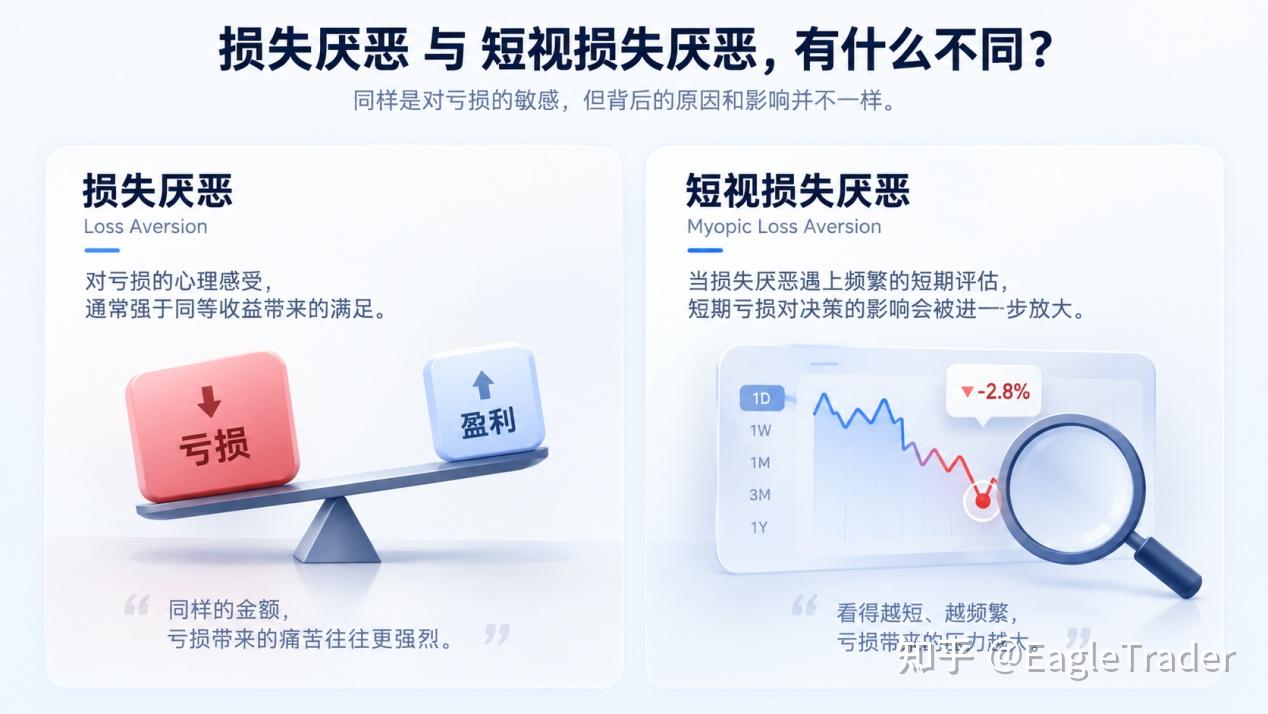
Putting it into a trading scenario, we can understand it simpler: the shorter the view, the easier it is to regard a normal fluctuation as a problem that needs to be dealt with immediately.
For example, a strategy itself allows several consecutive stop losses, and long-term statistics are still valid.
But if a trader re-judges "whether this strategy works or not" every time he makes a trade, after losing money for two or three times in a row, it is easy to start reducing positions, skipping signals, taking profits in advance, or even directly modifying the strategy.
The problem here is that what changes the trading plan at this time is not necessarily the failure of the strategy itself, but may just be the psychological pressure caused by short-term losses.
The same situation occurs during the profit phase.
For example, if the account has just retraced a little from the high point, it is eager to protect the profit; when the account turns from profit to loss on the same day, it immediately wants to recover the loss.
What was originally a strategy designed for a full cycle ended up being an immediate response to every account fluctuation.
Before the strategy had a chance to prove itself, the trader changed it.
It’s hard to fight with self-discipline, but rules can
The core variable of myopic loss aversion is evaluation frequency.The more frequently you look at results, the easier it is to get carried away by short-term fluctuations.
But the problem is that it is difficult to solve this problem with self-discipline - because frequent market reading itself is a behavior driven by loss aversion.
The more you are afraid of losing, the more you want to watch; the more you watch, the more afraid you are.
At this time, the value of proprietary trading is reflected.
It does not eliminate loss aversion, nor does it make traders automatically rational.
But it can provide a clearer criterion for judgment.
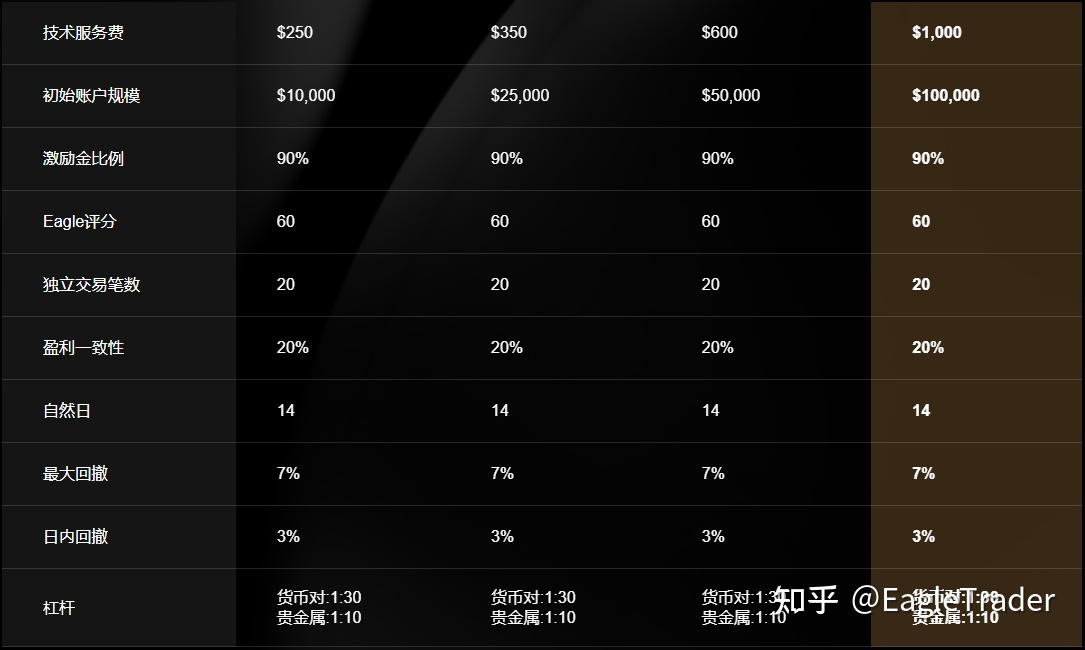
Taking the proprietary trading EagleTrader Max real-time account mode as an example, the account has two layers of dynamic risk boundaries:
The maximum drawdown is 7%, calculated based on the historical highest water level of the account; the maximum intraday drawdown is 3%, calculated based on the highest water level on the day.
The two rules focus on different time scales.
The 7% maximum drawdown requires traders to consider risk over the entire account lifecycle.
When the account continues to reach new highs, the risk benchmark will also change accordingly, and position and drawdown management need to continuously adapt to the account status.
A 3% intraday retracement draws the boundaries of single-day risk.
The occurrence of several losses in one day does not mean that it is necessary to "make it back" immediately. The first thing traders need to consider is whether the remaining risk budget of the day can support continued trading.
A very practical change brought about by such rules is:
Traders need to gradually shift from "whether this transaction makes a profit or a loss" to "how much risk does this transaction take up, and whether my strategy is still within the plan."
For people who are easily affected by short-term profits and losses, this is actually a completely different trading perspective.
A strategy needs to be given enough time to prove itself
The most troublesome thing about myopic loss aversion is that it easily causes traders to mistake "short-term experience" for "long-term results."
A one-day retracement may be just an ordinary move in the trading cycle.
If every loss triggers a strategy adjustment, then no matter how good the system is, it will be difficult to fully operate according to the original logic.
Therefore, when testing trading ability, profit itself is only part of the result.
Whether it can be executed according to the established position, whether it can accept losses within the allowable range of the strategy, and whether it can continue for a period of time within a clear risk boundary will also affect the final stability of the account.
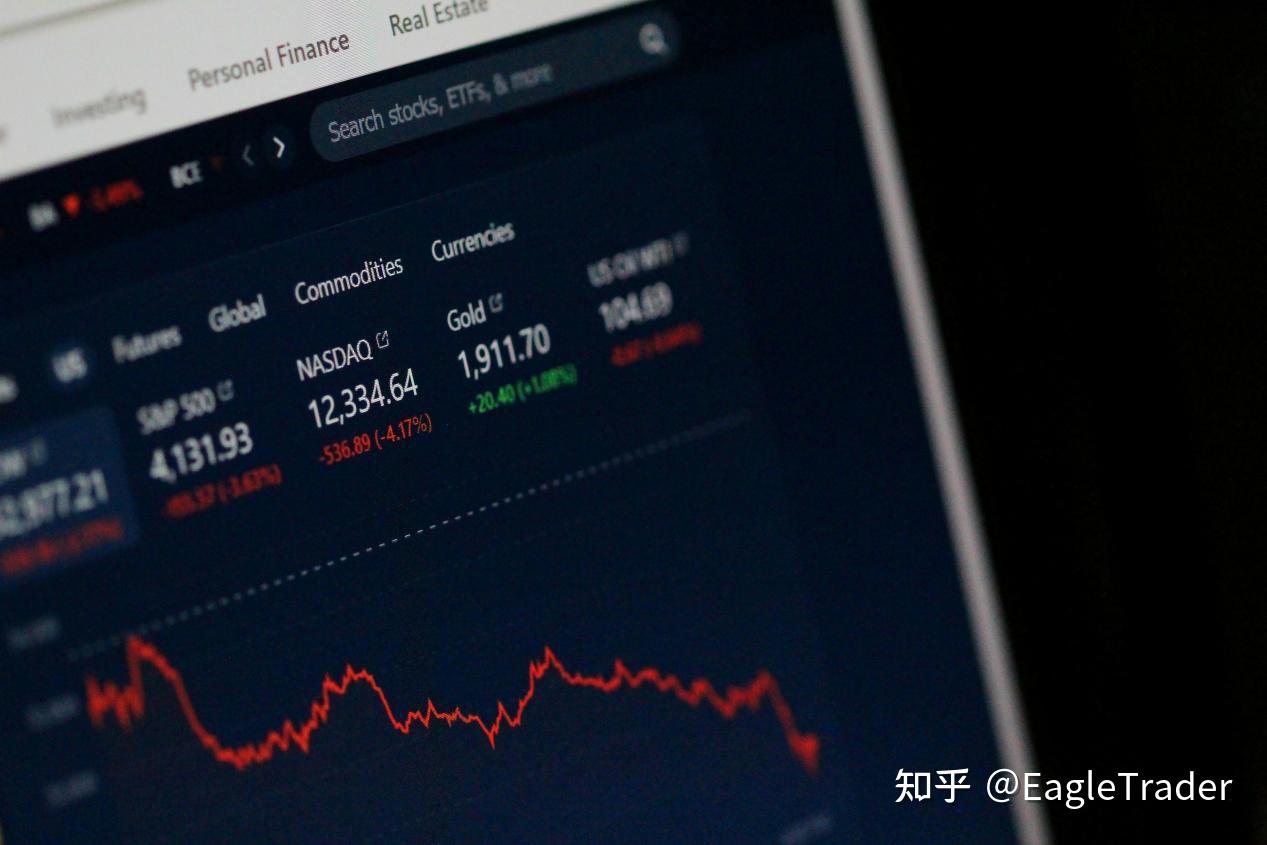
This is why, when designing some self-operated trading, "consistency" is placed higher than "short-term profit goals".
For traders who already have mature strategies, what they really need to face when participating in proprietary trading is not the rules themselves, but whether they can continue to execute according to the original system when short-term profits and losses continue to appear.
Because the most difficult thing to control in trading is sometimes not the next market trend.
It's about your next move after seeing the changes in your account numbers.
Contact
|
Leave a message online
|
Service hotline
852-53489575
 |

Incubate the world's top traders
Participate in 90% profit sharing