

In the trading market, quantitative trading and subjective trading are often considered two different paths. The former relies on data, models and program execution, while the latter relies more on experience, judgment and on-the-spot decision-making.
But in the eyes of traders with many years of trading experience, the ultimate goal of the two is actually the same: to establish a trading system that can execute long-term, control risks, and adapt to market changes.
Zhu Yong, who started to be exposed to foreign exchange trading in 2017 and has 9 years of trading experience, has gradually formed his own trading methods through continuous practice.
"Currently, my account can make stable profits. Taking the EagleTrader exam is more about improving profitability and proving that I have a certain profitability."
From personal account trading to participating in self-operated trading assessments, for Zhu Yong, it is also a process of re-verifying his own trading system.
From quantitative trading, he understands the importance of rules better
Currently, Zhu Yong mainly uses quantitative trading to trade. For many traders, the biggest attraction of quantitative trading is data and models, but for Zhu Yong, the biggest change brought about by quantification is that he pays more attention to trading rules.
“Because I only achieved stable profits after doing quantitative trading, I know the importance of rules and execution is the most important.”
In the process of quantitative trading, the strategy needs to set clear conditions in advance, including transaction logic, risk range and execution method. This kind of regular thinking has gradually affected his daily trading habits.
In trading decisions, he mainly relies on technical analysis, while fundamentals serve more as auxiliary reference. "My own account is mainly for quantitative trading to achieve long-term stable profits. I also look at the fundamentals. It is only used as an auxiliary, accounting for about 20%."
The key to profitability is not to increase the winning rate, but to control risks
In the long-term trading process , Zhu Yong formed a clear trading philosophy: "Strategies that can make long-term profits are to exchange small losses for large profits, minimize risk exposure, and do a good job in risk management."
Rather than pursuing every market opportunity, he pays more attention to whether risks are within controllable limits. At present, his single transaction risk is usually controlled at 0.5%-1% of the account funds, and will not exceed his risk threshold.
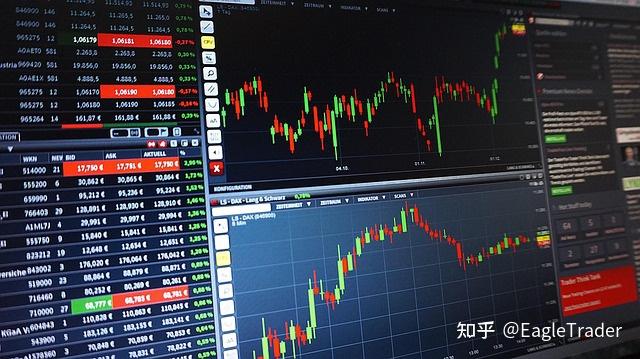
In the face of market changes, he will also actively adjust his trading rhythm. "The market is changing, and I mainly do trend trading. In the current volatile market, I should reduce positions and reduce wear and tear, waiting for the arrival of the trend market. ”
The concept of quantitative trading is highly consistent with the proprietary trading system
Although quantitative trading and proprietary trading seem to belong to different directions, in Zhu Yong’s view, they have the same underlying logic: using rules to constrain transactions and using discipline to manage risks.
Quantitative trading requires strict implementation of model rules. Proprietary trading also requires traders to conduct transactions within a clear risk range.
Participating in the EagleTrader assessment is not only a verification of trading ability, but also a test of one's own trading system.
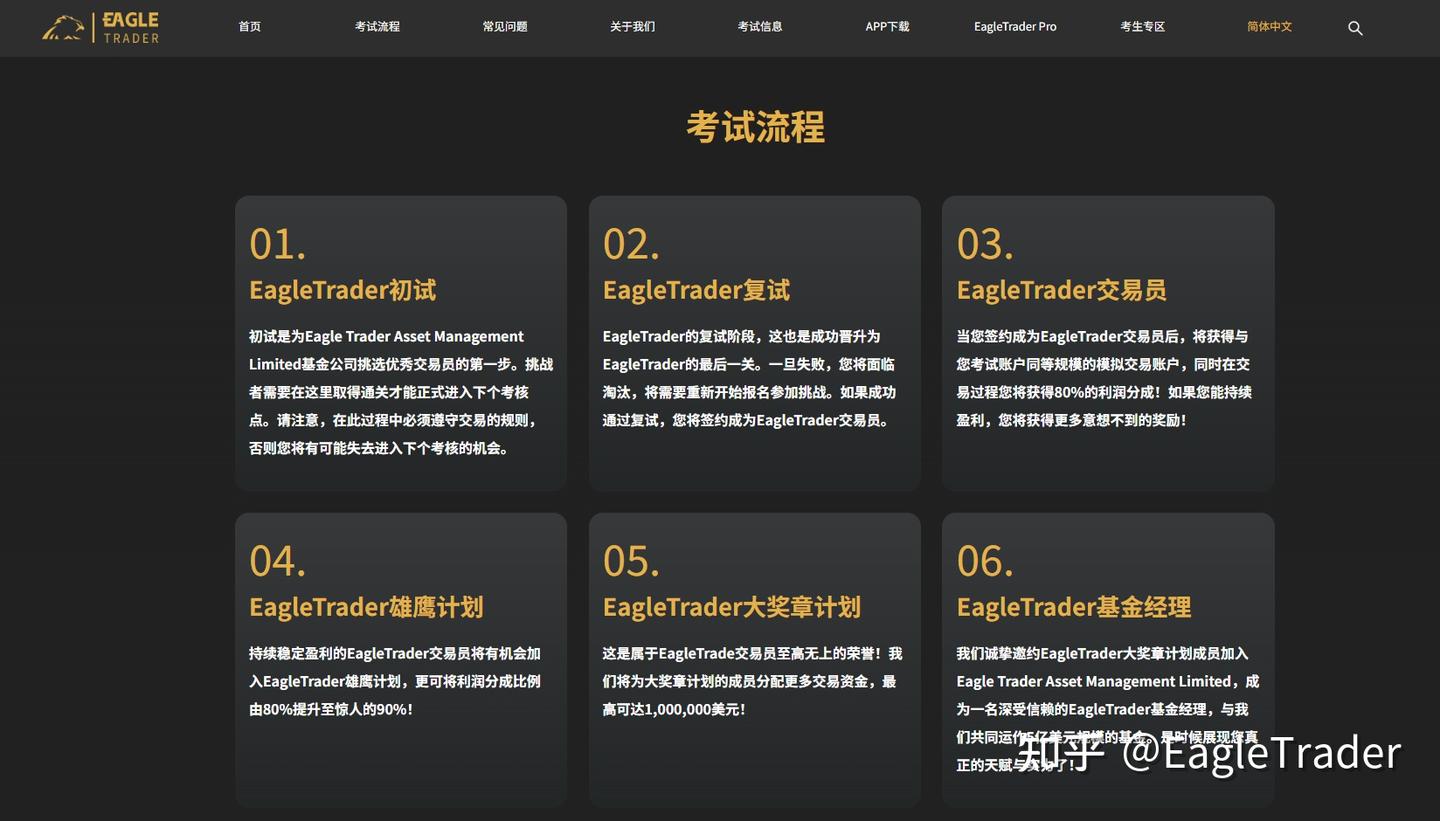
"The biggest gain this time is getting the exam certificate. When my friends saw my exam certificate, they all thought that I knew how to trade, which also proved that I did have a certain degree of profitability. "
After experiencing losses, he paid more attention to trading discipline
Every trader will go through a growth stage. Looking back on his early trading experience, Zhu Yong also experienced liquidation: "When I was a novice, I must have liquidated my position, mainly because of taking orders. Only after exploding a position did I realize that light positioning with stop loss is the only way to survive in the market for a long time. "This experience has also changed his trading method.
Now, when there are unexpected fluctuations in the market, he will not choose to wait for the market to reverse, but give priority to controlling risks: "If there is an unexpected large loss, you should stop the loss immediately and leave the market. You cannot allow the risk to continue to expand, and reduce your position in the following transactions. ”
Trading consistency is the basis for long-term stability
In Zhu Yong’s view, trading consistency is not simply repeating a certain operation, but maintaining stable risk standards in different market environments.
“The consistency of trading is first to control the risk within a certain range, and use the same risk ratio to trial and error every time you open a position. If the strategy deviates, I will stop trading and reflect carefully. I will not trade impulsively. "
The market is always changing, but what traders can control is their own behavior. Therefore, for new traders who have just entered the trading market, he also shared his experience: "The market will always change, and the market will also change. All traders can do is to control risks to a minimum.Only by reducing risks can you survive in the market as long as possible. ”
For Zhu Yong, the growth of trading is not about constantly looking for ways to have a higher winning rate, but about establishing a more stable execution system amidst market changes.
From quantitative trading to proprietary trading, no matter what method is used, rules, discipline and risk management are always the basis for traders’ long-term development. For traders who want to further improve their trading system , the proprietary trading model provides a more systematic practice environment. Through clear rule requirements and transaction process verification, it helps traders constantly discover their own shortcomings, optimize trading methods, and gradually establish a more mature trading system through continuous practice. More knowledge about proprietary trading is still being shared. If you are interested, please follow us!
Contact
|
Leave a message online
|
Service hotline
852-53489575
 |

Incubate the world's top traders
Participate in 90% profit sharing