

During the trading process, many traders will continue to learn new analysis tools, hoping to improve their ability to judge the market.
From moving averages and MACD to price action and order flow, each analysis method has its own advantages and is suitable for different market environments.
Today, we will talk about an analysis method that has attracted more and more attention from professional traders in recent years-Order Flow.
Compared with just observing price trends, order flow pays more attention to the buying and selling power behind the transactions. When the market is about to reverse, it can often help traders see some details beyond the K-line.

There are actually signs of trend reversal
Many traders believe that market reversals always come unexpectedly.
In fact, before most trend reversals, the market has often released some signals, but these changes are difficult to see directly from the K-line.
From the perspective of order flow, an upward trend usually goes through three stages.
First, the buying order is absorbed.
The price continues to rise, and active buying continues to enter the market. It seems that the upward momentum is strong, but the price has been unable to continue to break through.
This means that there are a large number of limit sell orders in the market that continue to accept these buying orders. Although buyers are still actively entering the market, the upward momentum has begun to be gradually consumed.
This phenomenon is like constantly stepping on the accelerator but never being able to continue accelerating. When buying orders continue to be absorbed, the market may gradually lose its upward momentum.
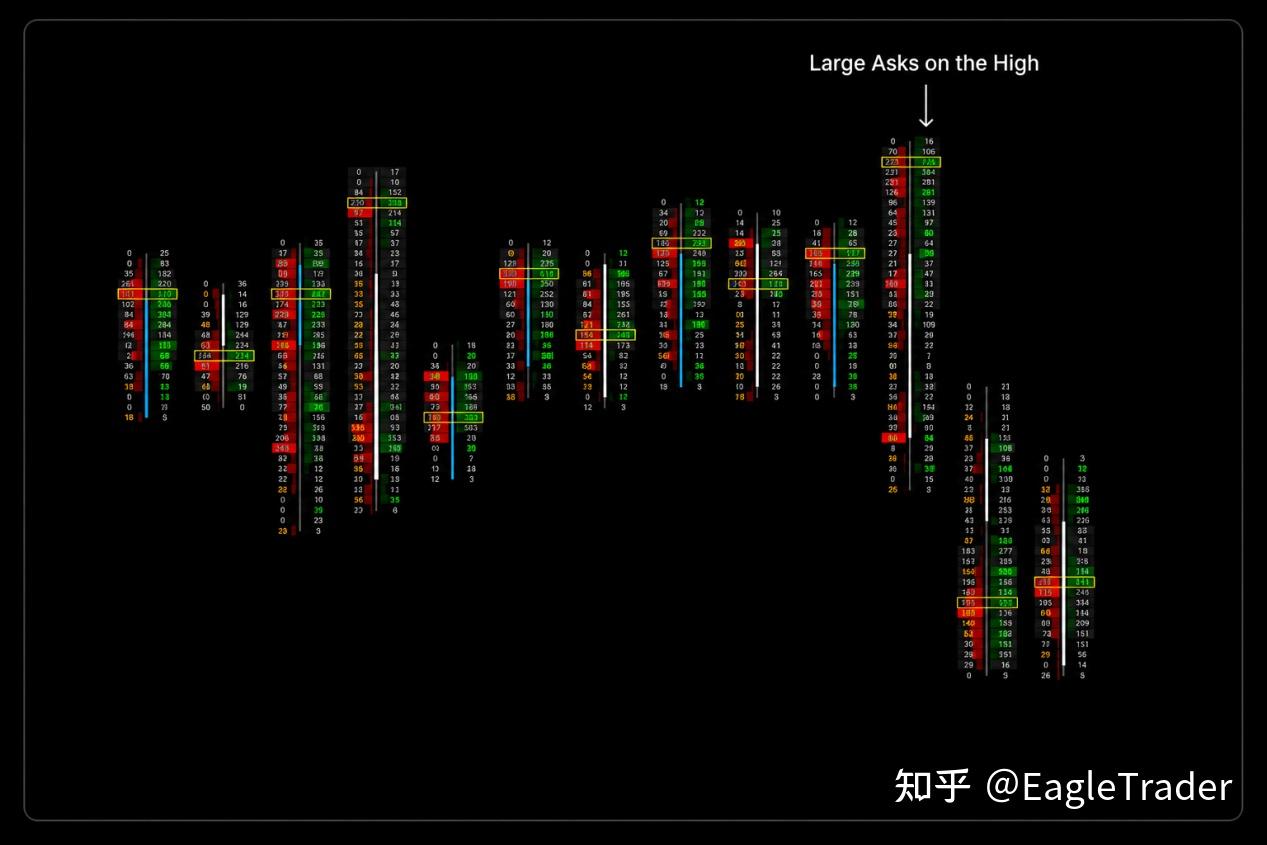
Second, the market momentum began to exhaust (Exhaustion).
As prices continue to hit new highs, fewer and fewer traders are willing to continue chasing higher prices, and trading volume begins to decline significantly.
At this time, the price may test the high point again, but the power to promote the market to continue rising is obviously insufficient. The market is not falling back because there is a lot of selling, but because fewer and fewer people are continuing to buy.
Third, the seller took the initiative to launch a counterattack.
When active selling begins to enter the market intensively,When the price falls below a key position, traders who originally held long orders may stop their losses and leave the market one after another.
These stop-loss orders further push prices down, and market control gradually shifts from buyers to sellers, creating a trend reversal.
Therefore, what order flow focuses on is not how much the price has fallen, but whether the power of buyers and sellers has changed.
Why do some people always buy at the highest point?
Many traders have had similar experiences. The market continued to rise, and after breaking through the previous high, I chose to pursue the long position, but found that the price quickly fell back shortly after entering the market.
Many people will attribute this situation to a "false breakthrough", but order flow can help us further understand the reasons for the formation of false breakthroughs.
For example, when the price reaches a new high, if there is a large amount of active buying in the market, but it is unable to push the price to continue to rise, it means that these buying orders are likely to have been absorbed by larger selling orders.
On the surface, the bulls are still very strong; in fact, the initiative in the market has begun to shift. This is why some seemingly perfect breakthroughs eventually become the starting point for market reversals.
Similarly, in classic price action analysis, order flow can also help traders further verify trading signals. For example, many traders will use the hammer line (Pin Bar) as a potential reversal signal. If the position of the shadow line is accompanied by obvious trading volume and a shift in buying and selling power, then this type of signal usually has more reference value; conversely, if the shadow line is only formed by short-term price fluctuations and lacks real transaction support, then its reliability will often be greatly reduced.
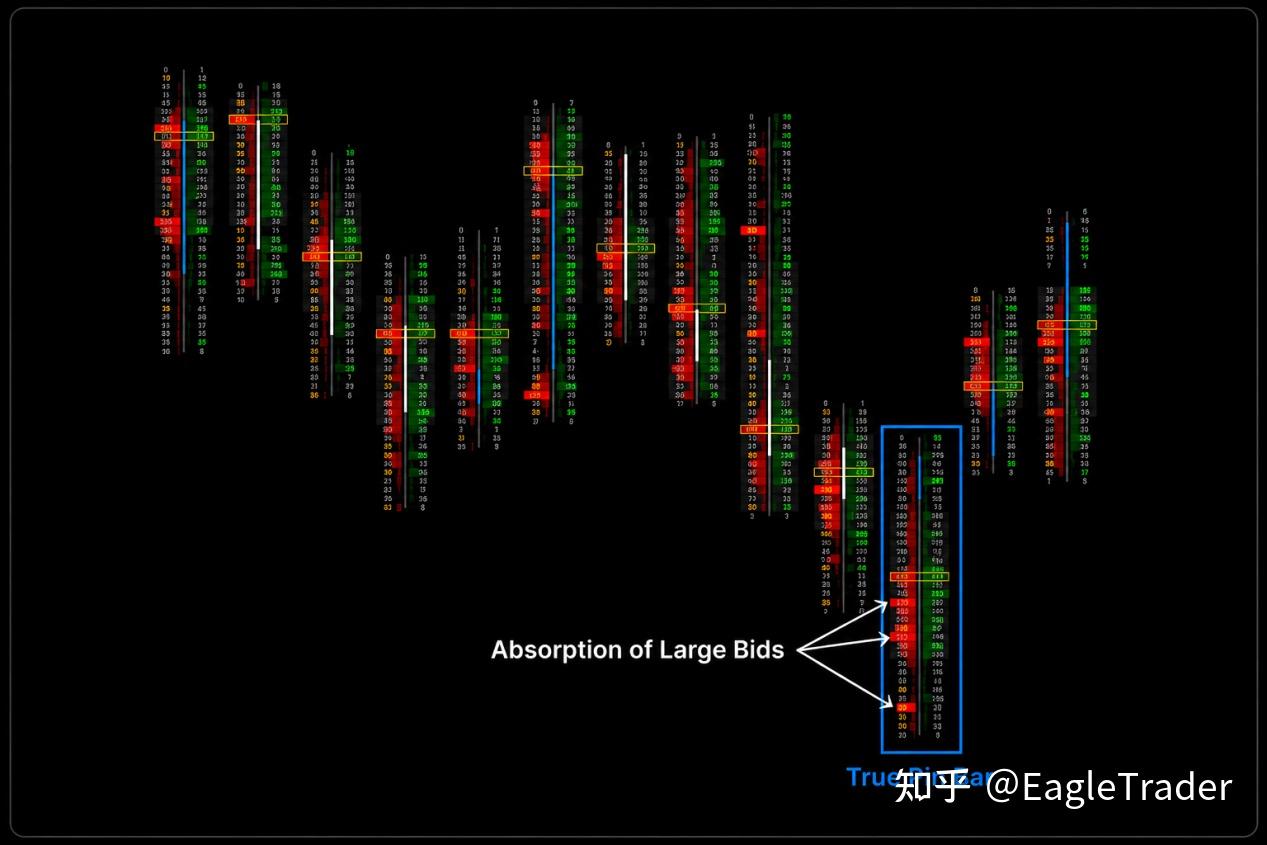
Order flow does not replace the K-line, but helps traders understand the reasons for the formation of the K-line, allowing price action analysis to have more basis for judgment.
Learn the tools, but also the verification tools
Order flow can help traders observe the market from a new perspective, but it is still only a trading analysis tool. Whether it is order flow, moving averages, or price action, no tool can guarantee that every judgment is correct. More importantly, whether it can be integrated with your trading system and maintain stable performance in different market environments.
After learning a new technical tool, many traders are often eager to put it into real trading without sufficient verification. Once the market environment changes, not only the effectiveness of the strategy may be greatly reduced, but the cost of trial and error may also be too high, affecting account performance.
As a result, more and more traders are beginning to pass proprietary trading assessments and learn about new trading tools and transactions.Easy strategy to verify.
Compared with direct testing using real funds, proprietary trading assessment can continuously test the trading system at a lower verification cost and under rules close to the real trading environment. Traders not only have the opportunity to test new analytical methods using larger demo accounts, but also simultaneously verify whether fund management, risk control, and trade execution are stable enough.
For those who want to improve their trading capabilities, this verification process is more valuable than simply learning a technical tool.
This is why EagleTrader always insists on creating a growth-oriented proprietary trading assessment.
We hope that traders can not only learn new trading methods, but also constantly verify their trading systems, optimize risk control capabilities, and cultivate more stable trading habits through standardized assessment environments, so that every attempt becomes a part of trading growth.
The market will not become easy to predict just because you have mastered an analytical tool. Order flow can help traders better understand the buying and selling power behind the price, but what affects the trading results is still the complete trading system and the ability to continuously verify and optimize.
For every trader who hopes to make continuous progress, learning a tool is just the beginning. Truly integrating it into your own trading system and verifying its effectiveness through continuous practice is a more important step in the process of trading growth.
Contact
|
Leave a message online
|
Service hotline
852-53489575
 |

Incubate the world's top traders
Participate in 90% profit sharing